






Performance Longboard or Traditional Log: Which One Is Right For Me?

Cover shot: 10 Over's Chris Thomson on a lil' Lombok mission. Photo: Nathan Benham.
If you're in the market for a new longboard, there are probably dozens of questions you're asking yourself. What size do I go for? Shall I look for a noserider? Can I carry it over long distances? There are many variables that go into detangling surf rhetoric.
There's another dimension here too; do you want a more performance orientated longboard, or are you looking at more traditional log-riding, with the style and mindset that comes with it?
It's a decision worth unpacking from your mental larder, especially if you're looking to drop some considerable coin on a new bit of ultra-long foam. Largely, choosing between the two shapes will come down to what kind of surfer you are, and what type of surfer you want to become. That decision will guide you out of board buying paralysis. Let's dig into it.

Mr Thomson, nestling into one a primo-fun Porthmeor day. Photo: Benham.
What Is a Traditional Log?
A traditional log is the classic longboard shape. Heavy under-arm, thick rails – it is the quintessential longboard experience. Logs are built for style over speed. For smooth, flowing glide and noseriding, tipping your little toesies over the edge of the business end of a log.
These boards paddle easily, catch waves early and are forgiving on smaller, mushier days when there isn't much power in the wave. They come with generous volume baked in making them stable underfoot, which is part of why they're a favourite for beginners as well as traditional-style surfers. Turning a log is a deliberate, rather unhurried affair, you shift your weight, cross-step and let the board's rail and length do the work for you, rather than popping off quick direction changes.

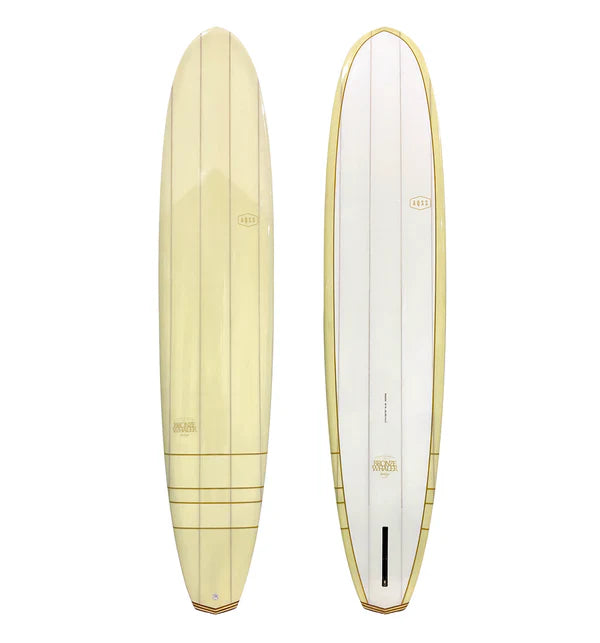
Now in stock, Stewart’s most classic log and an old-school single-fin noserider.
What Is a Performance Longboard?
A performance longboard blends the length and paddle power of a log with design elements borrowed from shortboards. These include a narrower outline, reduced volume, more rocker and potentially a different fin set up to maximise performance. The result is a board that can still noseride and glide but is far more responsive when it comes to carving, cutbacks and fitting into the pocket of the wave.
Performance longboards reward a more progressive, aggressive style of surfing. Surfers can generate speed through rail-to-rail turns, work the whole wave face and adapt to steeper or more powerful conditions that would overwhelm the heavier, traditional log.

Stewart's Ripster still has some of those more traditional elements, but it's been built as a performance single fin longboard. Grab it by clicking the image. As the company says: “The Ripster combines classic styling with modern technical design features, making it the ultimate performance single fin!"
Comparing the Two
Glide or Responsiveness: A log's flat rocker and wide outline are built for glide and trim, you can ride for a long time on very little wave energy. A performance longboard trades some of that glide for manoeuvrability, making it easier to turn quickly and react to changing wave shape.
Stability or Control: Logs are more stable at slow speeds and easier to stand on while learning to cross-step up the board. Performance longboards feel less stable when you're static but offer more control once you're moving and turning, especially in steeper or faster waves.
Wave Conditions: Surf a log in smaller, weak, mellow surf like high tide Godrevy, or Saunton. Performance longboards do well across a wider range of conditions, including head high waves when a log would become unwieldy.
The 10 Over Verdict
It's all down to how you want to cruise. Neither shape is better, they're designed for really different waves and different styles of surfing. A traditional log offers effortless glide, classic style and forgiving stability, making it ideal for beginners and noseriding purists. A performance longboard offers more speed and manoeuvrability, rewarding surfers who want to push their longboarding into more dynamic and critical territory.
If you're new to longboarding or chasing that classic noseriding feel, start with a log. If you already have your footwork all dialled in, and want to surf more actively across a range of conditions, a performance longboard will open up your surfing. Odds are, you'll end up with both anyway. Board acquisition theory is N+1, with N being the amount of boards you currently have.
-
Posted in
10 Over Surf Shop News

